Compound Nouns vs. Prepositional Phrases
Key Point
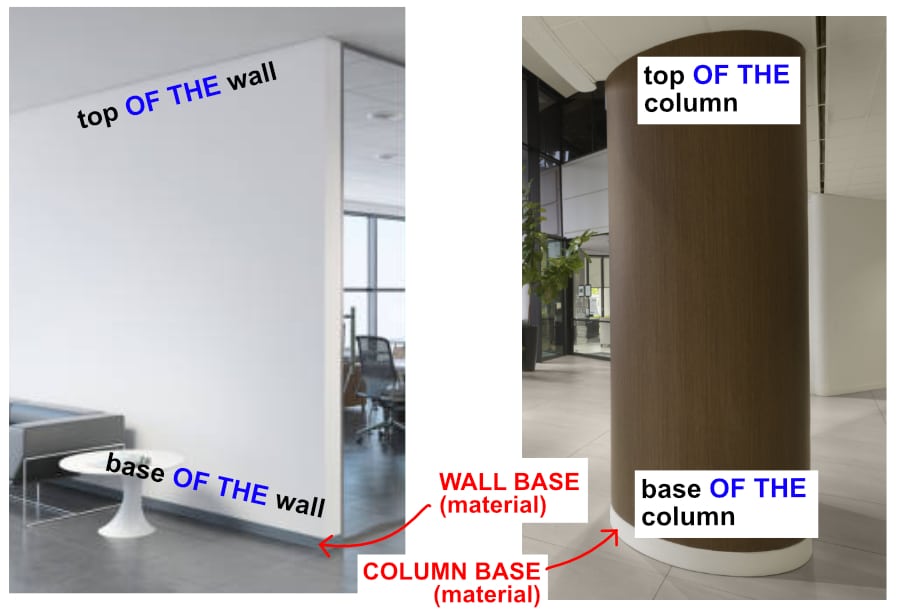
Compound nouns ( NOUN + NOUN ) describe specific technical things, systems and materials
Prepositional phrases ( __OF THE ) describe positions and locations.
Watch the video below for a short tutorial.
Lesson Clip
Watch the video lesson below for an explanation of this concept with more examples.
This video is a short sample of a longer lesson video from the course Floor Plans 2: Dimensions and Requirements
Summary
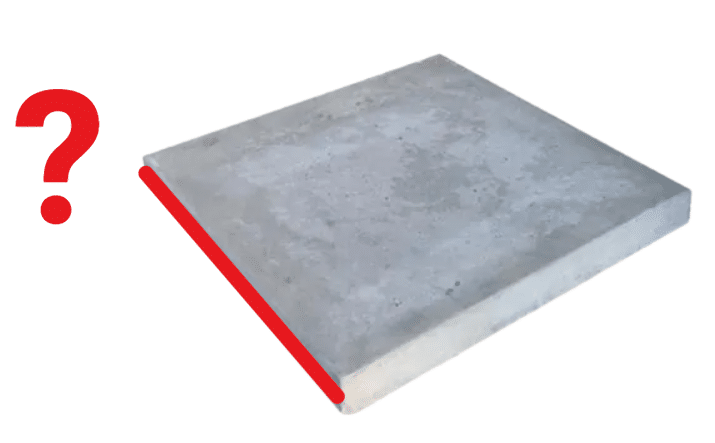
Let’s look at two ways to describe the same thing: slab edge and edge of the slab. Both are correct, but we use them differently.
Edge of the Slab (Prepositional Phrase)
When we say “edge of the slab,” we’re focusing on the slab and describing which part of it. This phrase answers the question: “Where on the slab?” The word “of” is a preposition that helps us be specific about location.
We commonly use this form for dimensioning. For example: “The edge of the slab is 400mm from the gridline.” In casual speech, native speakers often drop “the” and say “edge of slab.”
Slab Edge (Compound Noun)
When we say “slab edge,” we’re focusing on the edge and describing what type of edge it is. This compound noun answers the question: “Which edge? What kind of edge?” Here, “slab” works like an adjective to make “edge” more specific.
We typically use this form for technical terms – specific systems, materials, or components. For example: “The slab edge has a steel embed.”
Other Examples
The same pattern applies to other construction terms:
Door bottom (compound noun) = a specific component: “There’s an automatic door bottom for soundproofing”
Bottom of the door (prepositional phrase) = location/position: “The bottom of the door is 2cm above the floor”
More Examples:
visit the material noun collocations post
And the steel collocations post has specific noun-noun combinations for different steel systems and materials.